

Australia Travel Guide: First-Time Tips, Itineraries, and Trip Planning Advice



Planning your first trip to Australia can quickly turn into a question of what to leave out.
Sydney, Melbourne, the Great Barrier Reef, Uluru, Tasmania, and Western Australia can all be worth visiting, but the distances between regions make it difficult to fit everything into one vacation.
This Australia travel guide will help you decide where to go, how much time to allow, which destinations make sense together, and when to travel. You’ll also find sample itineraries, practical planning tips, and common mistakes to avoid when putting together your first Australia trip.
Allied Travel in Johnston, Iowa, helps travelers plan personalized vacations around their interests, schedule, and preferred travel style.
With Dean Burtch bringing more than 38 years of travel industry experience, the goal isn’t to fit the most stops into an itinerary. It’s to create a trip that gives you enough time to enjoy the places and experiences you traveled so far to see.
Australia Trip Planning Guide
What to Know Before Planning Your First Trip to Australia
Australia is a destination where choosing where not to go can be just as important as deciding where to visit.
The country is large, its regions offer very different experiences, and getting from one part of Australia to another can take a meaningful portion of your vacation.
Before choosing hotels or building a day-by-day itinerary, start with three questions: How much time do you have? What experiences matter most to you? And how many regions can you comfortably include without spending too much of the trip in transit?

Australia Is Bigger Than Many First-Time Visitors Expect
One of the easiest mistakes to make when planning Australia is looking at Sydney, Melbourne, the Great Barrier Reef, Uluru, and other destinations on a map and assuming they can all be combined easily.
In reality, major Australian destinations can be separated by long distances. For trips that include different parts of the country, domestic flights are often more practical than driving.
A rental car can be useful within certain regions, but driving across Australia simply to avoid flying can consume days that could otherwise be spent enjoying the trip.
This is why a good Australia itinerary should be measured by experiences and usable vacation time, not the number of stops.
For example, adding another destination doesn’t just mean adding another hotel. It can also mean packing, checking out, getting to an airport, flying, collecting luggage, transferring to another hotel, and getting settled again.
On a shorter trip, several changes like this can quickly make the vacation feel rushed.

Decide What Kind of Australia Trip You Want
Before deciding which cities and regions belong on your itinerary, think about what made you want to visit Australia in the first place.
If seeing the Great Barrier Reef is a priority, your itinerary needs to make room for Queensland and enough time to actually enjoy the experience. If you’re most interested in cities, restaurants, culture, and neighborhoods, Sydney and Melbourne may deserve more of your trip.
Travelers drawn to the Outback and Aboriginal culture may want to make Uluru and the Red Centre a priority, while nature and road-trip travelers may be more interested in Tasmania or parts of Western Australia.
You don’t necessarily have to choose only one type of experience. The point is to identify your priorities first and build around them.
A first Australia trip might combine:
- Cities and culture
- Reef and tropical scenery
- Wildlife and nature
- Beaches and coastal experiences
- Food and wine
- Outback landscapes
- Road trips and outdoor activities
- A slower vacation with fewer hotel changes
Once you know which experiences matter most, deciding what belongs in the itinerary becomes much easier.

How Many Days Should You Spend in Australia?
There isn’t one ideal trip length for everyone, but the amount of time you have should determine how ambitious your itinerary becomes.
7 to 10 days: Keep the trip focused. Rather than trying to cover several distant regions, choose a small number of destinations that work well together. With limited time, every additional flight or hotel change takes a larger share of the vacation.
About 2 weeks: Two weeks gives first-time travelers more flexibility to combine several different Australian experiences. You might pair major cities with Queensland, add the Red Centre, or build another combination around your priorities without changing locations every day or two.
3 weeks or longer: A longer trip creates room for another region, more driving, longer stays, or a slower pace. This is where destinations such as Tasmania or Western Australia may become easier to incorporate, depending on the rest of the itinerary.
More time doesn’t necessarily mean you should add as many destinations as possible. Sometimes the best use of an extra few days is simply staying longer somewhere you already planned to visit.
Later in this guide, we’ll look at sample 10-day, two-week, and three-week Australia itineraries and explain not only what each itinerary includes, but also what it intentionally leaves out.
Best Places to Visit in Australia for First-Time Travelers
There isn’t one set of destinations that every first-time visitor to Australia needs to see. The better approach is to choose places that give you the experiences you care about while still fitting comfortably into the time you have.
Sydney and Melbourne are natural choices for travelers who want cities, food, culture, and recognizable landmarks.
Queensland opens the door to the Great Barrier Reef and tropical landscapes. Uluru offers a completely different experience in Australia’s Red Centre, while Tasmania and Western Australia can make sense when nature, road trips, wildlife, or a less city-focused trip are higher priorities.
Here is what to consider before adding each one to your itinerary.

🗺️ Sydney
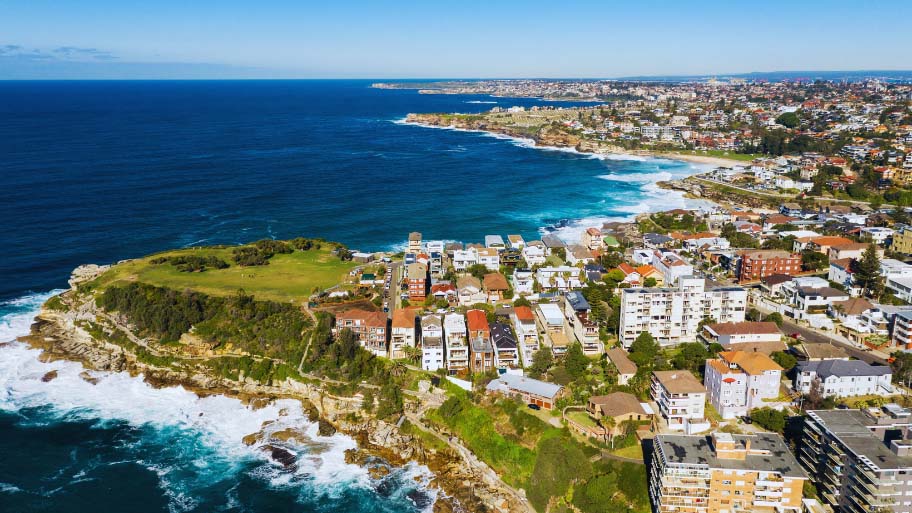
Sydney is an easy starting point for many first-time Australia trips because it combines major landmarks with beaches, neighborhoods, restaurants, and access to experiences beyond the city.
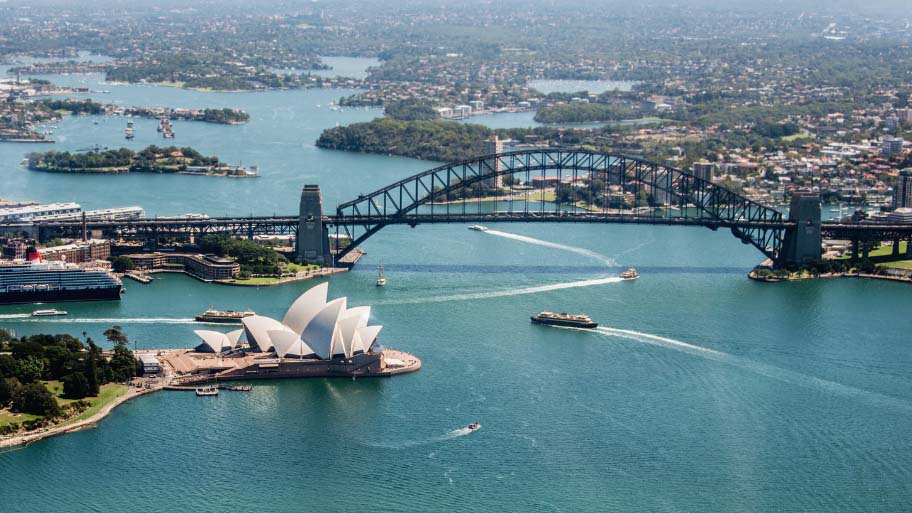
Sydney Harbour has the Sydney Opera House and the Sydney Harbour Bridge, but there’s a lot more to see in the city than just taking pictures. Exploring different neighborhoods, spending time along the harbor, visiting the coast, and leaving room for a day trip can give you a much better sense of the destination.
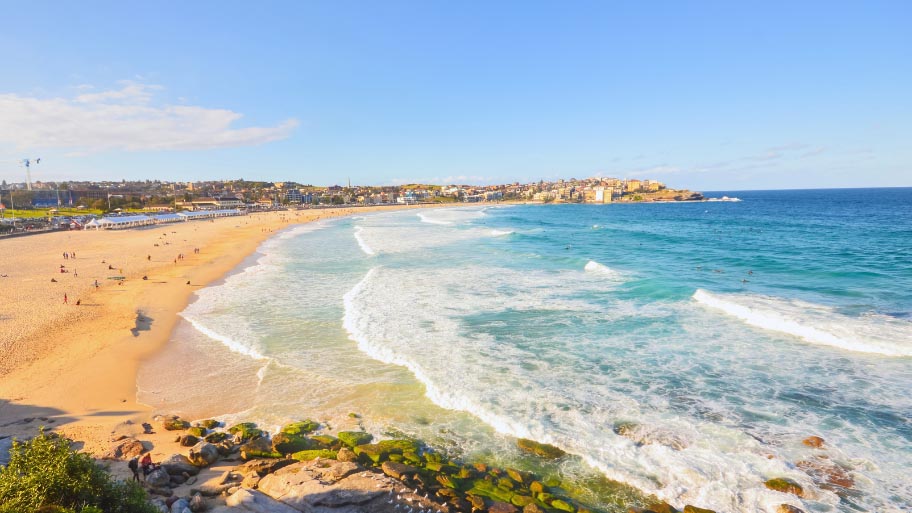
For travelers interested in beaches, Bondi Beach is one of the best-known options, while Sydney’s coastal setting offers plenty of opportunities to experience the city away from its central landmarks. Travelers with additional time may also consider a trip to the Blue Mountains outside Sydney.
Who should prioritize Sydney? First-time visitors who want a combination of iconic sights, city experiences, beaches, food, and an easy introduction to Australia.
The bigger planning question is how long to stay. Trying to treat Sydney as a one- or two-night stop can leave little time beyond the major landmarks, especially if you also want a beach day or an excursion outside the city.
Rather than asking whether Sydney belongs on a first trip, many travelers will need to decide how much of their limited vacation time they want to give it.

🌆 Melbourne
Melbourne offers a different city experience from Sydney, which is why visiting both can work well when the itinerary allows.
The city is particularly known for its food and coffee culture, arts, neighborhoods, laneways, markets, and sporting events. Instead of building a visit entirely around major landmarks, Melbourne rewards travelers who enjoy exploring neighborhoods and spending time experiencing the city itself.
Melbourne can also serve as a starting point for experiences elsewhere in Victoria, including the Great Ocean Road.
This is where itinerary planning becomes important. Seeing a portion of the Great Ocean Road on a long excursion from Melbourne is different from treating the route as a road-trip experience. Travelers who want to slow down, explore coastal towns, and make multiple stops need to give it more time rather than assuming everything can comfortably fit into a single day.
Who should prioritize Melbourne? Travelers interested in food, culture, neighborhoods, arts, sporting events, and combining a city stay with experiences elsewhere in Victoria.
For first-time visitors deciding between Sydney and Melbourne, the question doesn’t have to be which city is “better.” If time allows, they provide contrasting experiences. If time is limited, your interests—and what else you want to include in Australia—should help determine which one receives more time.

🪸 Great Barrier Reef and Tropical Queensland
If seeing the Great Barrier Reef is one of the main reasons you want to visit Australia, Queensland should be treated as a major part of the itinerary rather than a quick side trip.
One of the first decisions is where to base yourself.
Cairns is a major gateway for reef trips and also provides access to tropical North Queensland. Port Douglas is an hour’s drive from Cairns. You can go to the reef and visit the Daintree rainforest from there.
The Whitsundays provide another way to experience the Great Barrier Reef, particularly for travelers interested in islands, beaches, boating, and resort-style stays.
The right choice depends on what you want beyond the reef.
If your priorities include reef experiences plus rainforest and land-based exploration, Cairns or Port Douglas may make sense. If you’re picturing islands, beaches, sailing, and more time around the water, the Whitsundays may fit the trip differently.
It’s also worth leaving enough time for this part of the vacation. Weather and sea conditions can affect outdoor plans, so building an itinerary around one tightly scheduled reef excursion can leave little flexibility.
Who should prioritize Tropical Queensland? Travelers for whom snorkeling, diving, marine life, tropical scenery, rainforest, or the Great Barrier Reef is a major reason for visiting Australia.

🏜️ Uluru and Australia’s Red Centre
Uluru provides a dramatically different experience from Australia’s coastal cities and tropical regions.
Located within Uluṟu-Kata Tjuṯa National Park, Uluru is significant not only for its landscape but also for its cultural importance to the Aṉangu people, the Traditional Owners of the land. A visit should leave room to understand that cultural context rather than treating Uluru simply as another landmark to photograph.
The Red Centre also requires deliberate itinerary planning.
Adding Uluru usually means adding another flight and dedicating part of the trip specifically to Central Australia. Seasonal conditions matter as well. The region can experience very hot daytime temperatures during warmer parts of the year, while winter nights can become surprisingly cold.
That doesn’t make Uluru difficult to include. It simply means it should earn its place in the itinerary based on your priorities.
Who should prioritize Uluru? Travelers especially interested in Australia’s landscapes, Aboriginal culture, the Outback, walking experiences, and seeing a part of the country that feels very different from Sydney, Melbourne, or Queensland.
On a shorter trip, adding Uluru may mean giving up time somewhere else. That’s exactly the kind of tradeoff worth making intentionally.

🏔️ Tasmania
Tasmania can be especially appealing to travelers who want nature, wildlife, food, scenic drives, hiking, and a slower road-trip experience.
What first-time visitors should understand is that Tasmania isn’t simply another attraction to attach to an already crowded mainland itinerary.
Exploring beyond one city generally takes time, and many of the experiences that make Tasmania appealing are spread across the island.
That makes it better suited to travelers willing to dedicate a meaningful portion of the trip to it.
Depending on your interests, a Tasmania itinerary might include Hobart, national parks, coastal scenery, wildlife experiences, local food, and time on the road between destinations.
Who should prioritize Tasmania? Nature lovers, hikers, wildlife travelers, food-focused travelers, and people who would rather spend several days exploring at a slower pace than add another major mainland city.
If you only have a short first trip to Australia, Tasmania may be something you deliberately save for another visit. With more time—or when nature is one of your highest priorities—it can become a central part of the itinerary.

Western Australia
Western Australia is another destination that needs to be chosen deliberately because of its distance from many of Australia’s classic east-coast stops.
Perth can serve as the starting point for exploring the region, but Western Australia extends far beyond the city. Depending on the itinerary, travelers may be interested in beaches, wildlife, wine regions, road trips, and landscapes that are very different from Australia’s eastern cities.
The key issue for first-time visitors is geography. A flight between Sydney and Perth takes roughly four hours, so adding Western Australia isn’t the same as adding another nearby stop.
For some travelers, that’s completely worthwhile. For others—especially those with only 10 days or two weeks—it may make more sense to concentrate on eastern Australia, Queensland, or the Red Centre and save Western Australia for a future trip.
Who should prioritize Western Australia? Travelers who specifically want to experience the west, have enough time to make the additional travel worthwhile, or prefer nature, beaches, wine, wildlife, and road trips over trying to cover Australia’s most common first-time route.
The goal isn’t to fit Sydney, Melbourne, Queensland, Uluru, Tasmania, and Western Australia into the same vacation. It’s to understand what each destination contributes and choose the combination that creates the Australia trip you actually want.
How to Choose Which Australian Destinations to Combine
Once you have a list of places you’d like to visit, the next step is deciding which ones actually belong in the same trip. This is where many first-time Australia itineraries become too ambitious.
Instead of starting with every destination on your wish list, look for combinations that give you different experiences without requiring constant flights, hotel changes, and travel days.
The right combination depends on how much time you have and what you most want from the trip.

Sydney + Melbourne
Sydney and Melbourne are a natural combination for travelers who want to experience two of Australia’s best-known cities.
Sydney gives you the harbor, beaches, coastal scenery, and landmarks such as the Sydney Opera House and Harbour Bridge. Melbourne offers a different experience built around food, neighborhoods, arts, sporting events, and easy access to other parts of Victoria.
Because the cities are connected by frequent domestic flights, you don’t need to turn the journey between them into a road trip unless driving through southeastern Australia is specifically part of your plans.
Best for: First-time visitors who enjoy cities, food, culture, neighborhoods, and sightseeing.
Planning consideration: Give each city enough time to experience more than its headline attractions. If you also want the Great Ocean Road, Blue Mountains, or other excursions, account for those days rather than squeezing them into an already short city stay.

Sydney + Tropical Queensland
For travelers who want two very different sides of Australia, pairing Sydney with Tropical Queensland can make a lot of sense.
Sydney provides the city, harbor, beaches, and cultural side of the trip, while Queensland can add the Great Barrier Reef, tropical landscapes, rainforest, and marine experiences.
Flying between the regions is much more practical than trying to connect them by car on a short vacation.
The next decision is where you want to stay in Queensland. Cairns and Port Douglas work well for travelers interested in combining reef experiences with Tropical North Queensland, while the Whitsundays offer a different combination of islands, beaches, boating, and reef access.
Best for: Travelers who consider the Great Barrier Reef a priority but also want time in one of Australia’s major cities.
Planning consideration: Don’t schedule your only high-priority reef experience immediately before leaving the region. Allowing some flexibility can be helpful when outdoor activities depend on weather and sea conditions.

Sydney + Melbourne + Tropical Queensland
For many first-time travelers, Sydney, Melbourne, and Queensland create a well-rounded introduction to Australia.
The combination can provide three distinctly different experiences:
- Sydney for harbor, beaches, and major landmarks
- Melbourne for food, culture, neighborhoods, and Victoria
- Tropical Queensland for the Great Barrier Reef, rainforest, and tropical scenery
The tradeoff is time.
Trying to fit all three into a very short trip can turn an otherwise excellent combination into a series of airports and hotel check-ins.
With more time, the route becomes much easier to enjoy because each region can receive several days rather than functioning as a quick stop.
Best for: First-time visitors who want a broad introduction to Australia and have enough vacation time to divide between three regions.
Planning consideration: If you only have around a week, choose two priorities instead of forcing all three into the itinerary. Around two weeks gives you considerably more room to make this combination work at a comfortable pace.

Adding Uluru to Your Australia Itinerary
Uluru isn’t something to add simply because it appears on a list of Australia’s famous sights. It should be a deliberate part of the trip.
A visit to the Red Centre introduces landscapes and cultural experiences that are very different from Sydney, Melbourne, or Queensland, which is exactly why many travelers consider it worth the additional travel.
But adding Uluru also means dedicating flights, nights, and usable vacation time to Central Australia.
Ask yourself:
- Is experiencing the Red Centre one of the main reasons I want to visit Australia?
- Am I willing to remove or shorten another destination to make room for it?
- Does the time of year work for the activities I want to do?
- Can I give the experience enough time that it doesn’t feel like another rushed stop?
If the answer is yes, Uluru can add meaningful contrast to a first Australia itinerary.
Best for: Travelers who place Australia’s Outback landscapes and Aboriginal culture high on their list of priorities.
Planning consideration: Think of Uluru as a destination that deserves dedicated time, not a quick detour between Australia’s east-coast cities.

Adding Tasmania
Tasmania makes the most sense when you have enough time to experience more than a single arrival point.
The island can add hiking, wildlife, food, coastal scenery, national parks, and road-trip experiences to an Australia vacation. Those same qualities mean that moving around Tasmania is often part of the experience.
If your mainland itinerary is already full of short stays and flights, adding Tasmania may create more movement rather than the slower nature-focused experience you were hoping for.
With a longer trip, however, Tasmania can provide an excellent contrast to time spent in Australia’s major cities.
Best for: Nature, wildlife, food, hiking, and road-trip travelers who can dedicate several days to the island.
Planning consideration: Don’t add Tasmania simply because you have one or two unassigned nights. Decide what you actually want to experience there and allow enough time for it.

Adding Western Australia
Western Australia requires a similar decision, but geography makes the tradeoff even clearer.
Perth is several hours by air from Sydney, and Western Australia itself covers an enormous area. That means adding the west to an east-coast itinerary should usually be a deliberate choice rather than an extra stop.
For travelers with enough time—or those particularly interested in Western Australia’s beaches, wildlife, wine regions, landscapes, and road trips—the additional travel can be worthwhile.
For someone with a shorter first trip, concentrating on Sydney, Melbourne, Queensland, or the Red Centre may create a more comfortable itinerary.
Best for: Travelers specifically interested in Western Australia or those with enough time to make the additional distance worthwhile.
Planning consideration: Don’t think of Perth as simply one more Australian city to add between other stops. Consider what you want to experience in Western Australia and give the region enough time to justify traveling there.
Choose the Combination That Fits Your Trip
There is no single Australia itinerary that works for every first-time visitor. A traveler who dreams about snorkeling the Great Barrier Reef should build differently from someone most interested in food and cities.
A traveler who has always wanted to see Uluru may happily give up several days elsewhere to make the Red Centre possible. Someone who loves road trips and nature may get more from Tasmania than adding another major city.
The goal is not to ask, “How many places can we fit into Australia?”
A better question is:
“Which combination gives us the experiences we care about without spending too much of our vacation getting from one place to another?”
Once you’ve answered that question, building the actual itinerary becomes much easier.
Sample Australia Itineraries
There is no single best Australia itinerary. The right route depends on how much time you have and which experiences matter most to you.
These sample itineraries are starting points rather than schedules you need to follow exactly.
The important part is the planning logic behind them: choose a manageable number of regions, give your priorities enough time, and recognize what you are intentionally leaving for another trip.
10-Day Australia Itinerary: Sydney + Tropical Queensland
With 10 days, a focused itinerary can be more rewarding than trying to squeeze Sydney, Melbourne, the Great Barrier Reef, and the Red Centre into one trip.
One option is to combine Sydney with Tropical North Queensland.
Best for: First-time travelers who want an iconic Australian city plus the Great Barrier Reef and tropical scenery.
Prioritizes: Sydney, reef experiences, and Tropical North Queensland.
Intentionally leaves out: Melbourne, Uluru, Tasmania, and Western Australia.
Why: Ten days disappear quickly when multiple domestic flights and hotel changes are added. Two main regions give you more usable vacation time in each place.
Alternative: If cities, food, culture, and neighborhoods matter more to you than the reef, Sydney + Melbourne can make a strong 10-day combination instead.
2-Week Australia Itinerary: Sydney + Melbourne + Tropical Queensland
Around two weeks gives you enough flexibility to experience several different sides of Australia without turning every few days into another travel day.
A classic first-time route could combine Sydney, Melbourne, and Tropical Queensland.
Best for: First-time travelers who want a broad introduction to Australia.
Prioritizes: Two major cities, food and culture, the Great Barrier Reef, and tropical experiences.
Intentionally leaves out: Uluru, Tasmania, and Western Australia.
Why: Adding another major region would require another flight and another hotel change. For many travelers, using those days to properly experience Sydney, Melbourne, and Queensland creates a better-paced first trip.
3-Week Australia Itinerary: Sydney + Melbourne + Uluru + Tropical Queensland
Three weeks creates room to add another distinctly Australian experience without simply making the shorter itinerary move faster.
One option is to combine the east-coast cities and Great Barrier Reef with time in the Red Centre.
Best for: First-time travelers who want several contrasting Australian experiences and have enough time to make the additional flights worthwhile.
Prioritizes: Sydney, Melbourne, the Red Centre, Great Barrier Reef, cities, culture, landscapes, and nature.
Intentionally leaves out: Tasmania and Western Australia.
Why: Even with three weeks, trying to cover every major Australian region can create an itinerary dominated by transportation. Tasmania or Western Australia can easily become the foundation of a future trip rather than something squeezed into this one.
What If You Want to Visit Australia and New Zealand on the Same Trip?
Australia and New Zealand can be combined, but whether they should be combined depends heavily on how much total vacation time you have.
If you only have around 10 days, dividing the trip between two countries may leave you with very little time to experience either one. Even two weeks requires meaningful choices about what you will skip.
With a longer vacation, combining the countries becomes easier because you can build a focused Australia itinerary and still give New Zealand enough time to be more than a quick stop.
Before deciding, ask yourself:
If Australia already includes Sydney, Melbourne, Queensland, Uluru, or several other regions on your wish list, adding New Zealand without increasing the length of the trip usually means something else needs to come out.
The same principle applies throughout Australia trip planning: extra destinations aren’t free. They cost time.
A good itinerary makes those tradeoffs deliberately.
Best Time to Visit Australia

The best time to visit Australia depends less on finding one perfect month and more on where you plan to go and what you want to do there.
Australia’s seasons are opposite those in the United States: summer runs from December through February, fall from March through May, winter from June through August, and spring from September through November.
But those seasons don’t affect every part of the country the same way.
Tropical northern Australia, including areas near the Great Barrier Reef, is also commonly planned around wet and dry seasons. Meanwhile, conditions in Sydney, Melbourne, Tasmania, Uluru, and Western Australia can be very different during the same month.
That’s why it makes sense to choose your destinations first and then determine which time of year fits them best.
🌸 Visiting Australia in Spring: September to November
Spring can be a good time for travelers who want to explore cities, coastal areas, and outdoor destinations before Australia’s peak summer period.
In southern destinations such as Sydney and Melbourne, temperatures generally become warmer as the season progresses, making it easier to combine sightseeing with outdoor activities.
Spring can also work well for travelers building an itinerary around several regions because it provides a transition between the cooler southern winter and hotter summer conditions.
The important exception is tropical northern Australia. As the year moves toward summer, conditions there begin transitioning toward the wetter, more humid part of the year.
Consider spring if: You want a mix of cities, sightseeing, outdoor activities, and generally milder conditions across parts of southern Australia.
☀️ Visiting Australia in Summer: December to February
Summer brings warm weather to much of southern Australia and can be appealing for beaches, coastal trips, outdoor dining, and longer days.
It’s also a popular travel period, so accommodations, flights, and high-demand experiences may require earlier planning around busy dates.
Summer does not mean ideal conditions everywhere.
Northern tropical regions can experience higher humidity, heavier rainfall, and tropical weather patterns during this period. Australia’s Red Centre can also become extremely hot, which can affect when certain outdoor activities are practical.
For travelers planning Sydney, Melbourne, southern coastal areas, or Tasmania, summer may fit the trip well. For an itinerary centered on the tropical north or extensive walking around Uluru, the seasonal tradeoffs deserve more attention.
Consider summer if: Southern cities, beaches, coastal experiences, and warm-weather travel are your priorities—and you’re comfortable planning around busier travel periods and regional heat.
🍂 Visiting Australia in Fall: March to May
Fall can offer an appealing balance for travelers who want to combine several Australian regions.
Temperatures begin cooling in southern parts of the country, while conditions in tropical northern Australia gradually transition away from the wetter summer period.
This can make fall worth considering for itineraries that combine cities, outdoor experiences, food and wine regions, or multiple climates.
As always, the exact timing matters. March conditions can look very different from late May depending on where you are traveling.
Consider fall if: You want to combine several regions and prefer avoiding the hottest part of the southern Australian summer.
❄️ Visiting Australia in Winter: June to August
Winter can be one of the most interesting seasons for first-time travelers because cooler weather in southern Australia coincides with generally drier conditions across much of the tropical north.
That can make the season particularly appealing when Tropical North Queensland or the Red Centre is a major priority.
Around Uluru, the cooler months can make daytime outdoor activities more comfortable than during the intense heat of summer. Travelers should still be prepared for temperature swings, including cold nights in Central Australia.
In Tropical North Queensland, the drier part of the year can be attractive for reef and rainforest experiences.
Southern Australia tells a different story. Melbourne, Tasmania, and other southern areas can be cool during winter, so travelers combining northern and southern destinations should pack and plan for very different conditions within the same vacation.
Consider winter if: The Great Barrier Reef, tropical north, or Red Centre is central to your itinerary and you don’t mind cooler conditions in Australia’s southern cities.
So, What Is the Best Month to Visit Australia?
There isn’t one month that is best for every Australia itinerary.
Instead, start with the experiences you care about most.
If the Great Barrier Reef is the centerpiece of your vacation, look closely at conditions in Tropical Queensland for your travel dates. If Uluru is a priority, consider how seasonal temperatures will affect the activities you want to do.
If you’re building around Sydney, Melbourne, Tasmania, or southern coastal experiences, the same month may produce completely different conditions.
For a multi-region trip, you may also need to accept a compromise. The weather doesn’t have to be perfect in every destination for the itinerary to work well.
The better question isn’t simply:
“When is the best time to visit Australia?”
It’s:
“When is the best time to visit the parts of Australia we actually want to experience?”
Answer that after choosing your destinations, and your travel dates become much easier to narrow down.
Australia by Travel Style

Two travelers can visit Australia for the same amount of time and come home having taken completely different trips.
That’s one of the reasons it’s better to build an itinerary around your interests rather than start with a list of places you think you’re supposed to see.
Your travel style can influence which regions you prioritize, how often you change hotels, and whether you spend more time in cities, along the coast, or exploring nature.

❤️ Australia for Couples
For couples, Australia works especially well when the itinerary balances sightseeing with enough unscheduled time to enjoy the trip together.
Sydney and Melbourne can provide restaurants, neighborhoods, cultural experiences, and city stays, while Queensland can add beaches, reef experiences, and tropical scenery.
Couples interested in food and wine may prefer to dedicate more time to regional experiences rather than adding another distant destination simply for variety.
The biggest planning consideration is pace. An itinerary filled with early flights and one- or two-night stays can leave very little time for a relaxed dinner, an afternoon at the beach, or changing plans when you discover somewhere you want to spend longer.
Planning approach: Choose a few contrasting experiences and give yourselves enough time to enjoy them instead of building the trip around constant movement.

👨👩👧👦 Australia for Families
Families often benefit from reducing the number of hotel changes and being more selective about long travel days.
Sydney can combine recognizable sights with beaches and outdoor activities, while Tropical Queensland can offer reef, rainforest, wildlife, and family-friendly experiences.
The right combination depends on children’s ages, interests, and comfort with flights, long excursions, and busy sightseeing days.
It can also help to think beyond the number of nights in each destination. A four-night stay with a late arrival and an early departure doesn’t provide four full days of activities.
For families, leaving some flexibility can make the trip easier when everyone needs a slower morning or an unscheduled afternoon.
Planning approach: Prioritize convenient bases, fewer transitions, and experiences the family actually wants to share rather than trying to cover the maximum number of regions.

🍷 Australia for Food and Wine Travelers
Food and wine travelers may want to give Australia’s cities and surrounding regions more time than a traditional sightseeing itinerary would.
Melbourne is particularly appealing for travelers interested in restaurants, coffee, markets, and neighborhood dining, while Sydney offers its own mix of restaurants and waterfront experiences.
Australia’s wine regions can also justify time outside the major cities depending on the route.
This is where slowing down becomes part of the experience. If food and wine are priorities, a regional meal, winery visit, market, or locally guided experience may be more valuable than using that day to fly somewhere else.
Planning approach: Build the itinerary around places where you can experience regional food and wine rather than treating meals as something that happens between sightseeing stops.
🦘 Australia for Nature and Wildlife Travelers
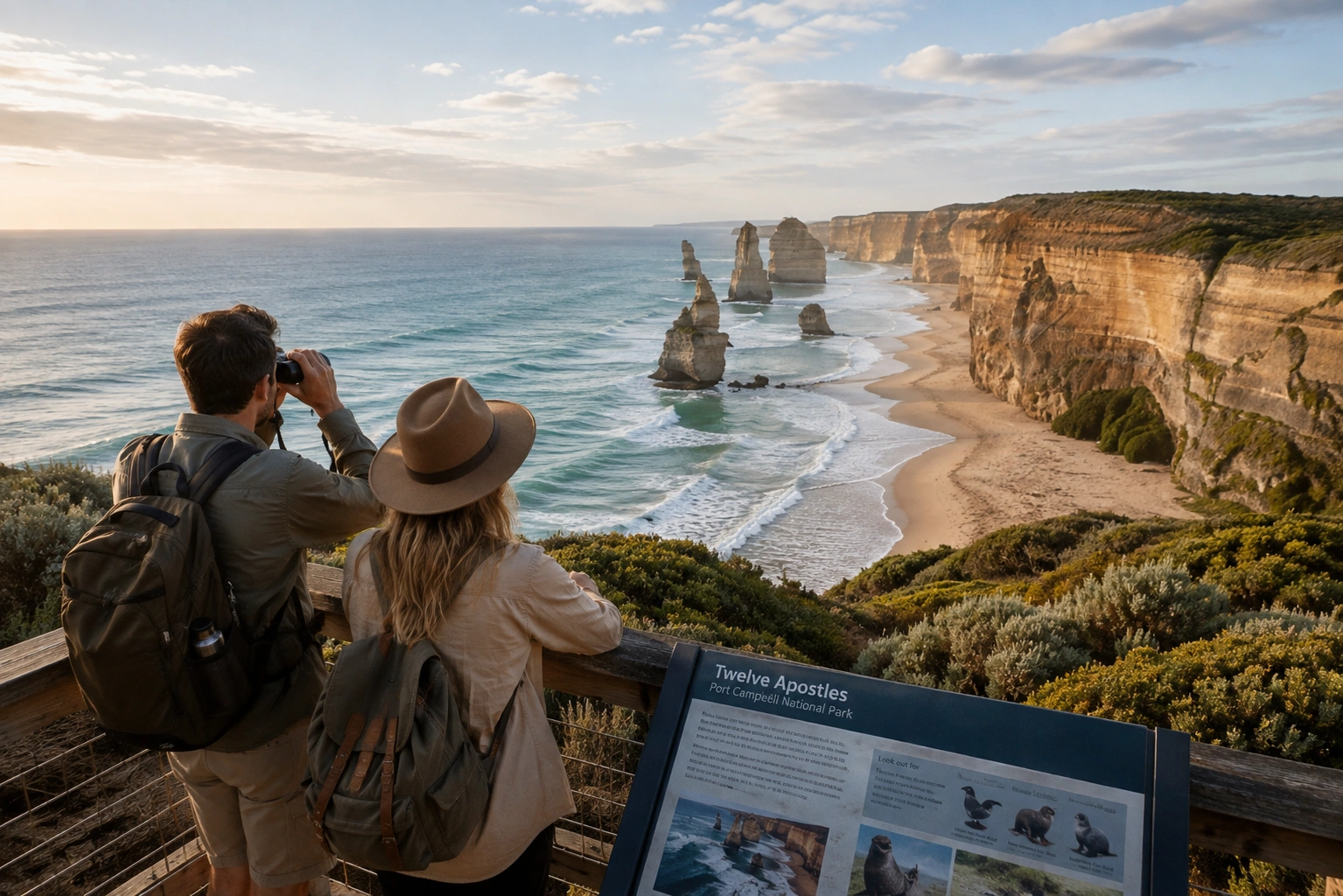
Travelers who care most about nature and wildlife don’t necessarily need to build their first trip around Australia’s largest cities.
Tropical Queensland can combine the Great Barrier Reef with rainforest and marine life.
Tasmania can provide hiking, wildlife, national parks, and scenic driving. Other regions offer beaches, coastal landscapes, and opportunities to experience Australia’s distinctive environments.
The key is deciding which type of nature experience matters most. Reef and rainforest travel requires a different itinerary from a Tasmania road trip, and both are different from visiting Australia’s Red Centre.
Trying to include every type of landscape can create exactly the rushed trip we’re trying to avoid.
Planning approach: Choose one or two major nature priorities first, then use cities or other destinations to complement them.

🥾 Australia for Adventure and Outdoor Travelers
For travelers who would rather hike, snorkel, dive, drive, or spend time outdoors than fill every day with traditional sightseeing, Australia offers plenty of ways to make those activities the foundation of the trip.
The Great Barrier Reef may justify several days in Queensland for snorkeling or diving. Tasmania can make sense for hiking and road trips.
Uluru and the Red Centre can add walking experiences and dramatic desert landscapes, while coastal regions can provide beaches, surfing, boating, and scenic drives.
Outdoor-focused itineraries also need more attention to season, weather, and flexibility. A tightly scheduled itinerary can be frustrating when a high-priority outdoor activity depends on conditions.
Planning approach: Choose your most important outdoor experiences first, identify the regions and seasons that support them, and leave enough flexibility for conditions to change.
Build the Trip Around What You Will Actually Enjoy
You don’t need to fit neatly into one travel style.
A couple might care most about food and hiking. A family might prioritize wildlife and beaches. Someone interested in Australian cities may still consider the Great Barrier Reef the one experience they aren’t willing to miss.
That’s why the most useful question isn’t:
“What does everyone see on their first trip to Australia?”
It’s:
“What do we want to remember most about ours?”
Once those priorities are clear, it becomes easier to decide which destinations deserve more time—and which ones can wait for another trip.
Australia Trip Planning Tips Most First-Time Visitors Overlook

Planning a trip to Australia is different from planning a vacation where major destinations are only a short train ride apart.
The distances are larger, the climates can change dramatically between regions, and adding one more destination can mean another flight and another travel day.
Before you finalize an itinerary, consider these planning details that are easy to overlook.
✈️ Treat Travel Days as Part of Your Itinerary
A flight that takes a few hours can consume much more of the day once you include checking out, getting to the airport, checking in, collecting luggage, transferring to your next hotel, and checking in again.
That’s why counting only nights can make an Australia itinerary look more relaxed on paper than it actually feels.
If you have 12 nights but change regions four times, a meaningful portion of the trip may be spent in transit.
Planning tip: When comparing itineraries, count the number of destination changes—not just the number of vacation days.
🚗 Don’t Assume a Rental Car Is the Best Way to See Australia
A rental car can be valuable in the right part of an Australia trip, but that doesn’t mean you need one from beginning to end.
In major cities, a car may add parking and navigation concerns without providing much benefit. For longer distances between major regions, flying can often make more sense than driving simply because Australia is so large.
A car becomes more useful when the drive itself is part of the experience, such as exploring regional areas, coastal routes, wine country, or parts of Tasmania.
Planning tip: Decide where a car improves the trip and rent one for that portion instead of automatically keeping one for the entire vacation.
🗺️ Check Distances Before Adding “One More Stop”
Places can appear surprisingly close when you’re looking at a map of the entire country.
Before adding another destination, check how you will actually get there and how much usable vacation time the journey requires.
This is particularly important when considering destinations such as Uluru, Tasmania, or Western Australia alongside an east-coast itinerary. Each can be worthwhile, but each changes the logistics of the trip.
Planning tip: Every time you add a destination, ask what you’re willing to remove or shorten to make room for it.
🌦️ Give Weather-Dependent Experiences Some Flexibility
If snorkeling the Great Barrier Reef, hiking, boating, or another outdoor activity is one of the main reasons for your trip, avoid building an itinerary with no room for conditions to change.
Weather and sea conditions don’t follow your reservation schedule.
That doesn’t mean leaving several days completely empty. It means thinking carefully about where your highest-priority outdoor experiences fall within your stay and whether you have any flexibility if plans need to change.
Planning tip: Avoid scheduling a must-do outdoor experience at the last possible opportunity before leaving that region.
🛏️ Fewer Hotel Changes Can Create a Better Trip
Seeing more destinations doesn’t necessarily mean experiencing more of Australia.
Every hotel change involves packing, checking out, moving luggage, traveling, checking in, and getting oriented again. A trip with several one- and two-night stays can begin to feel like a sequence of transfers rather than a vacation.
Sometimes staying an additional night in one location gives you more meaningful choices: a neighborhood you hadn’t planned to explore, a slower meal, an additional excursion, or simply time without a schedule.
Planning tip: Look for places where one base can support several experiences instead of changing hotels whenever possible.
🧭 Decide Which Experiences Are Worth Planning Ahead
Not every hour of an Australia vacation needs to be reserved before you leave home.
However, if an experience is one of the main reasons you’re traveling, waiting until arrival may create unnecessary risk—particularly when your dates are fixed or availability is limited.
Think about the experiences you would genuinely be disappointed to miss. Those deserve priority when planning. Lower-priority activities can often remain flexible.
Planning tip: Separate your plans into must-do experiences and nice-to-do experiences. Protect the first group without allowing the second to fill every open day.
👣 Decide When Independent Exploring or a Guide Makes More Sense
Some parts of an Australia trip are well suited to independent exploration. In other situations, a knowledgeable guide can add context, simplify logistics, or help you understand a place beyond what you’re seeing.
Dean, owner of Allied Travel for 38 years, lists independent tours with a guide among his favorite vacation activities. That preference reflects a useful middle ground: you don’t necessarily have to choose between a fully escorted vacation and doing everything entirely on your own.
A trip can combine independent days with selected guided experiences where they add the most value.
Planning tip: Consider using guides strategically for experiences where local knowledge, cultural context, access, or logistics would meaningfully improve the day.
🕐 Leave Some Room for the Unexpected
A trip can combine independent days with selected guided experiences where they add the most value.
Planning tip: Consider using guides strategically for experiences where local knowledge, cultural context, access, or logistics would meaningfully improve the day.
That might be a restaurant you want to try, a neighborhood you hadn’t considered, a beach where you want to stay longer, or simply an afternoon when you don’t want another scheduled activity.
Dean’s own travel advice is that unexpected challenges often become some of the memories people cherish and talk about later.
That doesn’t mean traveling without a plan. It means creating a plan with enough flexibility to handle, and sometimes enjoy, the unexpected.
Planning tip: Build the important parts of the trip first, then resist the temptation to fill every remaining opening.
Start With Priorities, Not a Checklist
A well-planned Australia vacation isn’t the itinerary with the most destinations.
It’s the one that gives enough time to the experiences that matter most to you.
Choose your priorities first. Account honestly for distances and travel days. Plan the experiences you don’t want to miss. Then leave enough room to actually enjoy being in Australia.
That approach can make the difference between coming home remembering airports, luggage, and schedules, and coming home remembering the trip itself.
Practical Australia Travel Tips

Once you’ve decided where you want to go and how long to spend in each region, there are still a few practical details that can make an Australia trip much easier.
From entry requirements and domestic transportation to payments and accommodations, these are the details worth considering before you leave.
A Little Preparation Makes Independent Travel Easier
Good trip planning isn’t about eliminating every possible surprise.
It’s about taking care of the logistical details that could otherwise consume time and attention once you’re there.
When transportation, accommodations, important reservations, connectivity, documents, and other essentials are organized before departure, you have more freedom to focus on what you actually traveled to Australia to experience.
Common Australia Trip Planning Mistakes to Avoid

Australia’s size and variety make it easy to build an itinerary that looks manageable on paper but feels rushed once you’re there.
Avoiding a few common planning mistakes can help you spend more of your vacation experiencing Australia and less of it getting from place to place.
A Better Australia Trip Often Means Seeing Less
Leaving a destination for another trip isn’t a planning failure. Sometimes removing one stop gives you enough time to properly enjoy everything else.
Australia rewards travelers who prioritize experiences over the number of places they can check off a list.
How Allied Travel Helps Plan a Custom Australia Trip
Australia gives travelers plenty of choices, but those choices can make planning complicated.
Deciding which regions to combine, how long to stay, where to fly, and which experiences deserve priority can quickly turn into a lot of moving pieces.
At Allied Travel in Johnston, IA, personalized travel planning helps turn those possibilities into an itinerary built around the traveler rather than a generic checklist.

Depending on your trip, planning assistance may include:
Dean has owned Allied Travel for 38 years, bringing decades of experience in helping people plan vacations.
His own travel philosophy also emphasizes experiencing local restaurants, people and culture, along with independent travel complemented by guided experiences.
The goal isn’t to fit every famous Australian destination into one vacation. It’s to build a trip around what you want to experience and how you want to travel.
If you’re considering an Australia vacation, Allied Travel can help you sort through the options and create a personalized plan for your trip.
Ready to start planning? Contact Allied Travel in Johnston, IA to discuss your Australia vacation.
Common Questions About Traveling to Australia
How many days do you need for a first trip to Australia?
For most first-time travelers, 10 days to two weeks gives you enough time to experience two or three regions without constantly changing hotels and catching flights. If you have three weeks, adding a destination such as Uluru becomes easier. With less time, focus on fewer places and experience them more fully.
What is the best time of year to visit Australia?
There isn't one best time for every Australia trip because conditions vary significantly by region. Spring and fall can work well for many multi-region itineraries, while Australia's winter can be appealing for Tropical North Queensland and the Red Centre. Choose your destinations first, then determine which season best supports the experiences you want.
Where should first-time visitors go in Australia?
Sydney, Melbourne, and Tropical Queensland are a strong starting point for many first-time visitors because they provide very different experiences. Depending on your interests and available time, you might instead prioritize Uluru, Tasmania, or Western Australia. You don't need to visit every famous destination on your first trip.
How many places can you realistically visit in Australia in two weeks?
For many travelers, three main regions is a comfortable target for a two-week Australia vacation. For example, Sydney, Melbourne, and Tropical Queensland can provide cities, culture, beaches, and the Great Barrier Reef without requiring constant movement. Adding more destinations usually means sacrificing time somewhere else.
Do you need a rental car when visiting Australia?
Not for the entire trip. Major cities such as Sydney and Melbourne can often be explored without a rental car, while a vehicle may be valuable for regional areas, scenic drives, wine regions, or a Tasmania road trip.
Many Australia itineraries work best by combining domestic flights with shorter regional car rentals.
Is the Great Barrier Reef worth visiting on a first trip to Australia?
If marine life, snorkeling, diving, or tropical scenery are priorities, the Great Barrier Reef can absolutely deserve a place in your first Australia itinerary.
The important decision is where to base yourself, since Cairns, Port Douglas, and the Whitsundays offer different travel experiences beyond the reef itself.
Can you visit Australia and New Zealand on the same trip?
Yes, but the amount of time you have matters. With a short vacation, combining both countries can leave you rushing through each.
A longer trip makes it easier to build a focused Australia itinerary while still giving New Zealand meaningful time. Start by deciding which experiences in each country are non-negotiable.
Should I use a travel advisor to plan a trip to Australia?
A travel advisor can be especially helpful when you're trying to coordinate multiple Australian regions, domestic flights, accommodations, tours, and experiences into one workable itinerary.
Allied Travel in Johnston, IA helps travelers create personalized vacation plans based on their interests, available time, and preferred travel style.

ABOUT THE AUTHOR
Dean Burtch, the esteemed Navigator In Chief of Allied Travel, has steered the company with dedication and vision for 36 years. His global adventures, spanning from the historic wonders of Cairo to the vibrant heart of New York City, reflect a rich tapestry of travel expertise. Dean’s signature journey, a captivating sail through the Virgin Islands, marks the pinnacle of his travel experiences. He is a staunch advocate for diving into the essence of local cultures and believes that the most unexpected challenges often forge the most memorable and cherished travel tales. Dean’s guidance is a beacon for travelers seeking authentic and transformative experiences.